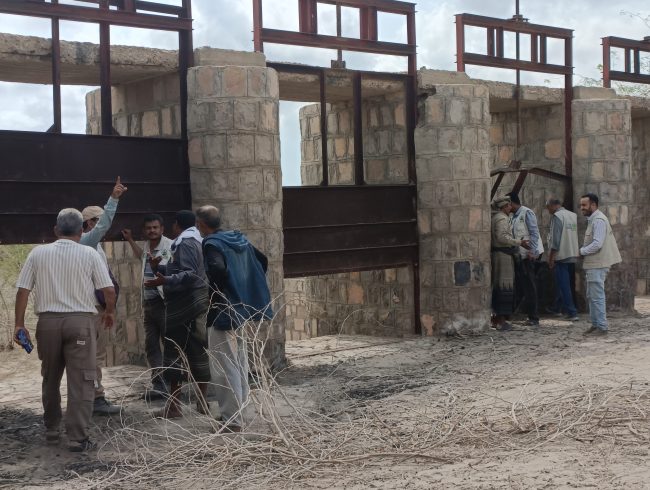
The Nabni B4P Facility has marked another milestone, with the completion of the co-design phase and the signing of Grant Agreements with its partners in Yemen. The agreements mark the commencement of all project activities – including planned infrastructure rehabilitation and service restoration.
The projects are managed by two NGO consortia, the first led by Nahda Makers Organisation (NMO) that includes Abyan Youth Foundation (AYF) and is focused on Abyan governorate. The second is led by the National Foundation for Development and Humanitarian Response (NAHR) working together with Sheba Youth Foundation for Development (SYF) across locations in Taiz and Aden governorates.
This milestone is more than the start of project implementation. It is the result of a thorough co-design process that included joint analysis, consultation, technical assessment, and close planning. Over the last few months, the partners – supported by Nabni’s team of country and technical experts have worked closely to turn initial project ideas into validated and actionable projects. This process included careful examination of local peace and conflict analysis, stakeholder engagement, feasibility studies, and environmental and social screening.
In Abyan, the project led by NMO, together with Abyan Youth Foundation, will focus on agricultural communities in the Abyan Delta. The local analysis showed that conflict dynamics in the area are strongly shaped by competition over natural resources, especially water and agricultural land, as well as by damaged irrigation infrastructure, flooding, farmland erosion and weak dispute-resolution mechanisms. It also identified existing capacities for peace, including tribal mediation, civil society engagement, religious and cultural values, and livelihood-based cooperation.
In Aden and Taiz, the project led by the NAHR, together with Sheba Youth Foundation for Development, will address service-related tensions in urban communities. The local analysis in Sirah and Al-Mu’alla in Aden, and Al-Mudhaffar and Al-Qahirah in Taiz, found that well documented conflicts were linked to water and sanitation services, with 73 out of 86 conflict cases related to water and sanitation. The main drivers included deteriorated networks, unequal water distribution, weak institutional capacity, population pressure, displacement, poverty and reduced trust in service providers.
Together, the two projects reflect Nabni’s commitment in Yemen to locally led reconstruction that contributes to peace and maintains trust among communities. They are designed to respond to visible community needs while addressing the deeper conflicts that influence those needs. By linking practical infrastructure improvements with dialogue, community participation, environmental and social safeguards, and stronger local coordination, the projects aim to create tangible peace dividends for communities affected by conflict, displacement, weak services and environmental pressures.
As implementation begins, Nabni Yemen and its partners will continue working with communities, local authorities and other stakeholders to ensure that the projects remain inclusive, conflict-sensitive and responsive to changes on the ground.
Post author: Hasan Ahmed, Country Grant Manager – Yemen